THE FIELD NOTEBOOK / MEASURE, CHECK, REPEAT

Every curve
has a backstory.

A selection from the project archive: observations, instrument tests and questions still being worked through. The notes distinguish a recorded trace from the interpretation placed on it.

An archived solar observationEnlarge image
PROJECT ARCHIVE · SOLAR

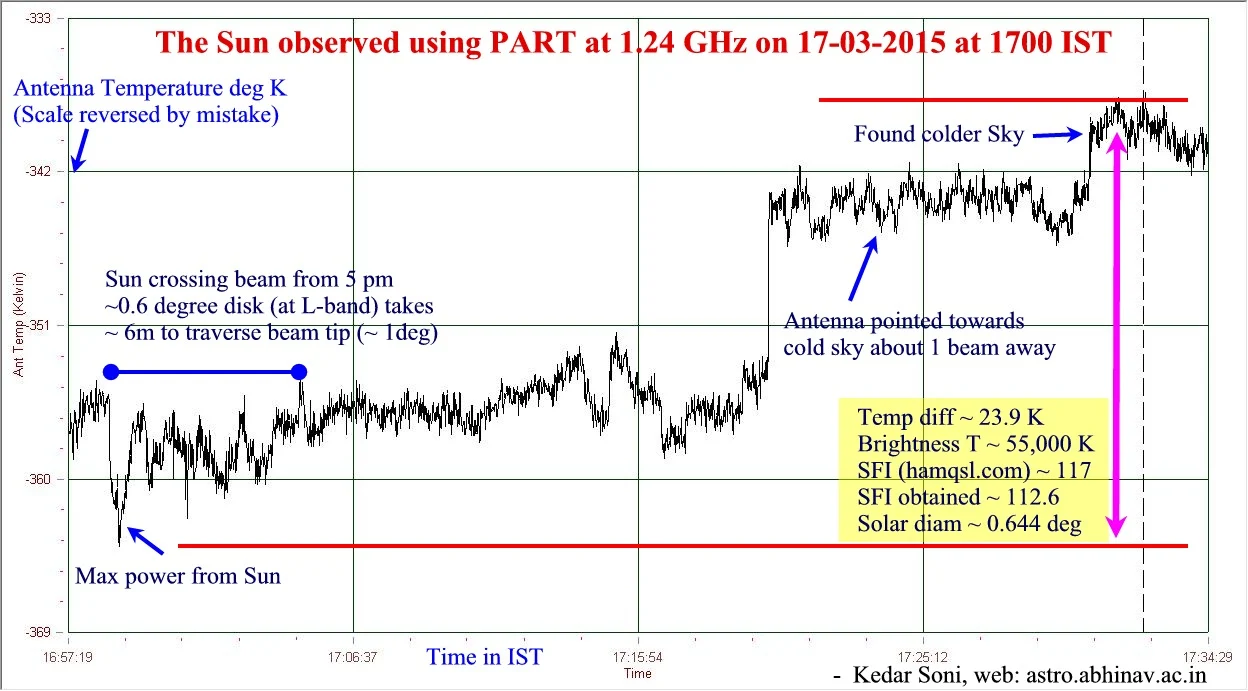
The Sun as a starting point.

Solar observing provides a practical route into drift scans, changing received power and the challenge of establishing a baseline.

What to look for

Compare on-source power with nearby sky at matched elevation. Keep receiver settings fixed and check for gain changes or interference. Convert logarithmic readings to linear power before background subtraction.
Antenna beam test from the project archiveEnlarge image
PROJECT ARCHIVE · BEAM RESPONSE

Measure the instrument first.

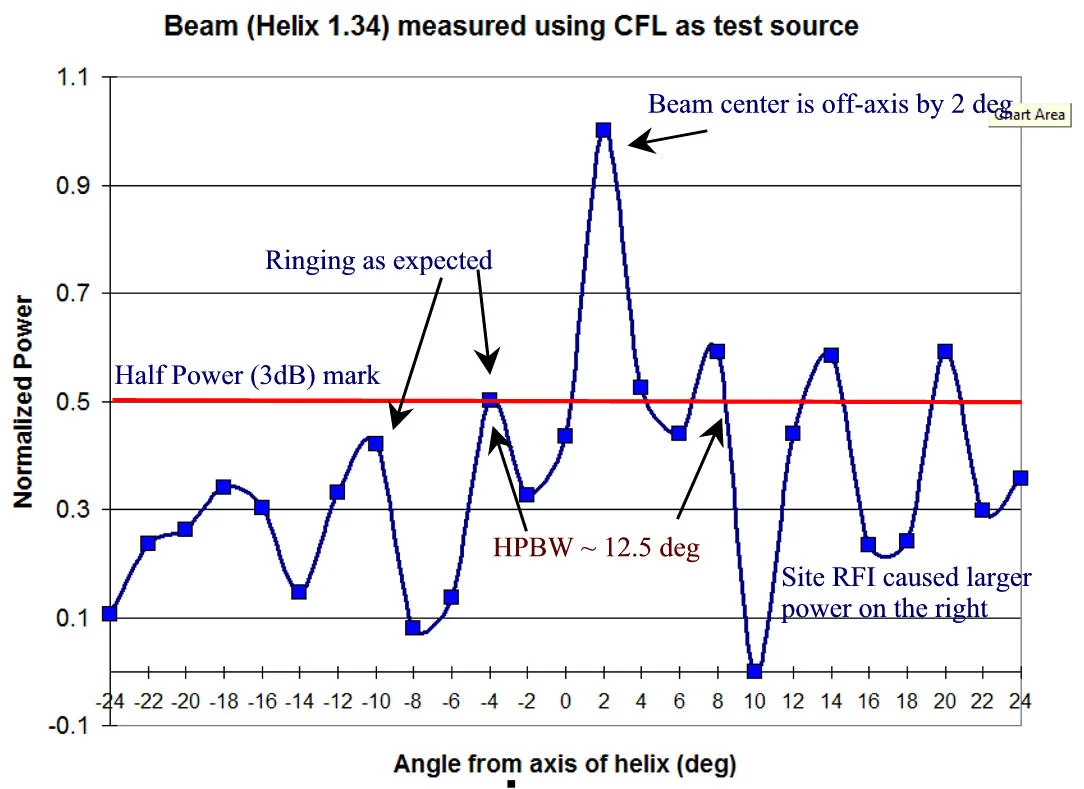
The antenna responds over an area of sky. Its main beam and sidelobes shape what an observing trace looks like.

What the curve can tell us

A measured response helps characterise the instrument. Source geometry, test distance and the receiver chain matter. A narrow feature in an observation is not, by itself, proof of angular resolution.

A receiver calibration setup photographed during the projectEnlarge image
PROJECT ARCHIVE · CALIBRATION

A number needs a reference.

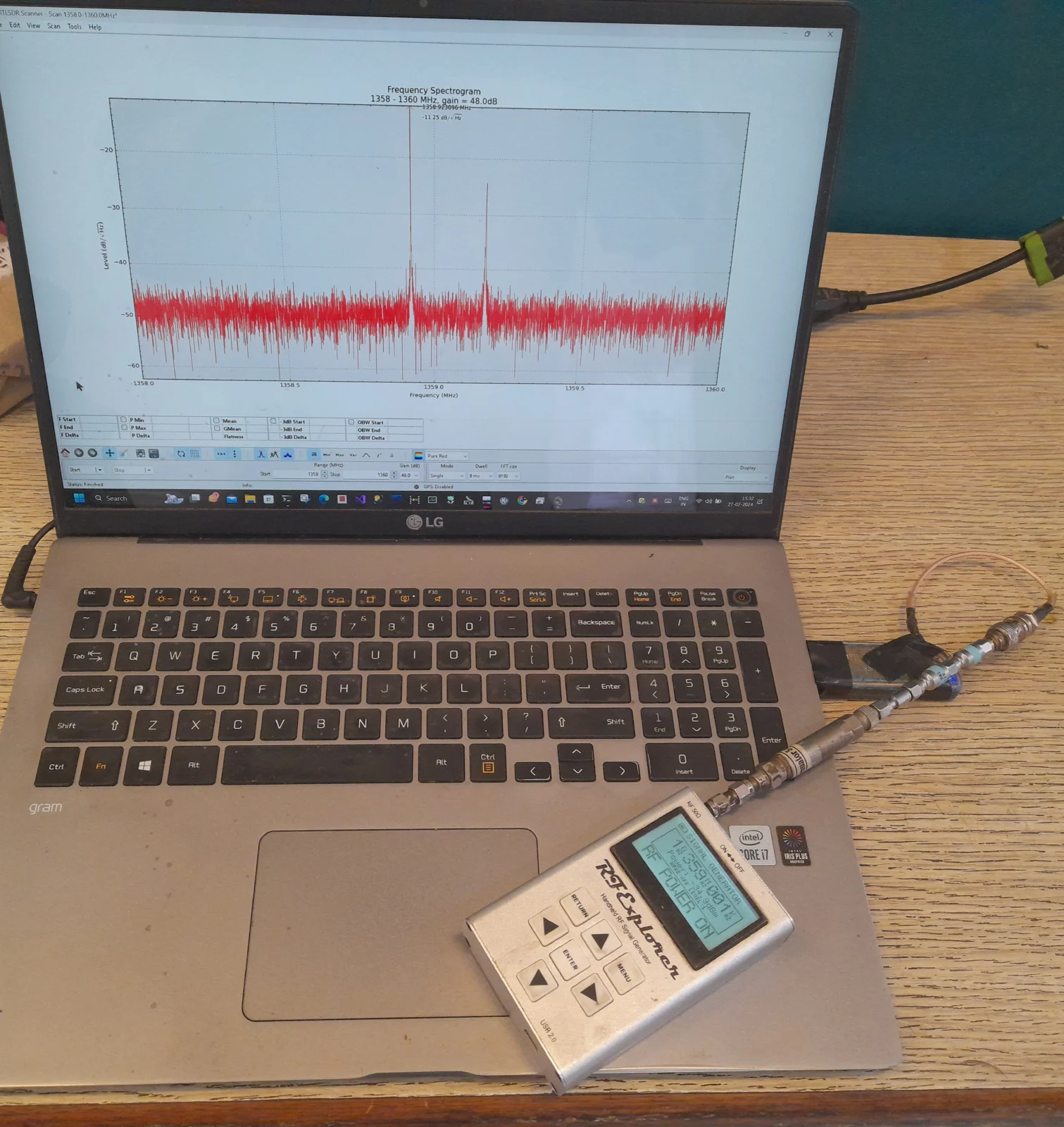
Calibration connects a receiver output to a useful physical estimate. Stability and repeatability are as important as a smooth-looking plot.

What needs to be recorded

Keep receiver gain, frequency, measurement bandwidth, integration time, cable arrangement and reference conditions with the observation. A reading in dBFS does not directly establish source flux density in Jy.

An annotated night-sky scan from the project archiveEnlarge image
PROJECT ARCHIVE · EXPLORATORY SCAN

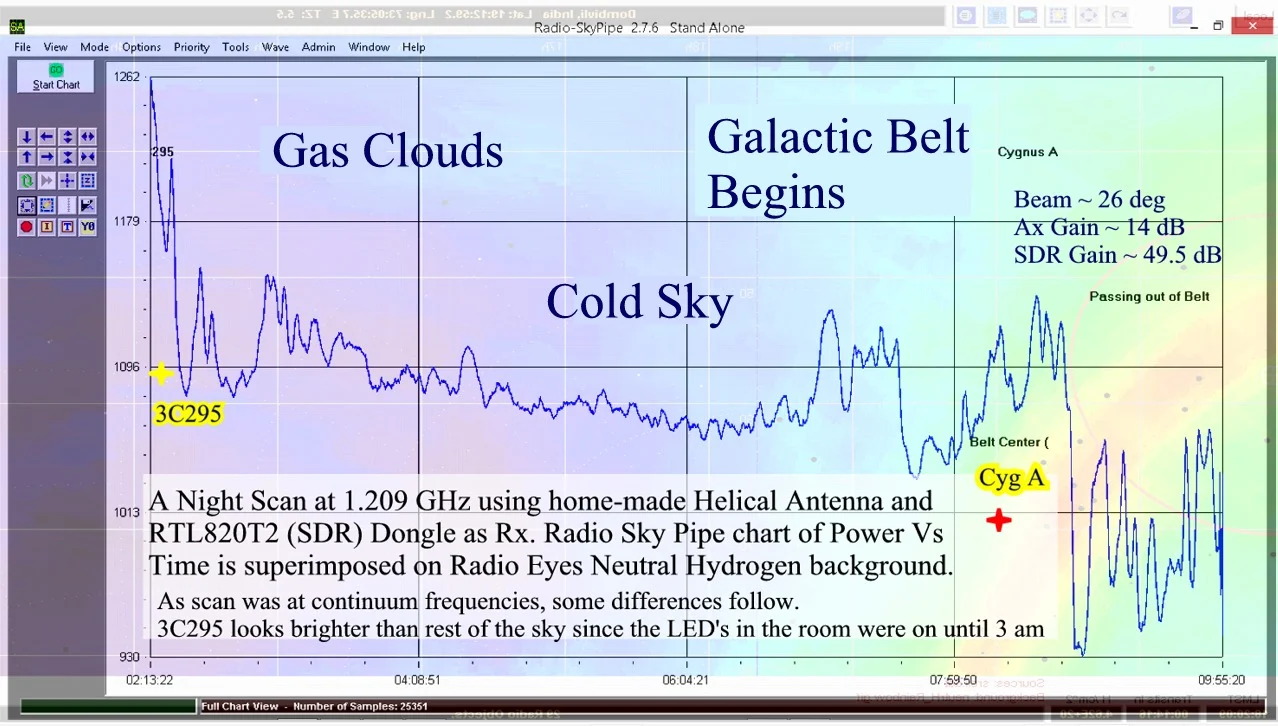
Long scans, many possible causes.

Extended observing sessions raise questions about broad sky background, local interference and changes in the receiving system.

Reading the archive carefully

Original annotations preserve the questions being explored at the time. Repeat scans, control directions, sidereal timing checks and instrument tests are needed before attributing features to particular sources.

Original project figures retain their historical annotations. Dates, units and receiver settings should be read from each figure where available.

INVESTIGATIONS IN PROGRESSWhat might lie further afield?Comparative plots, open questions and the next tests.

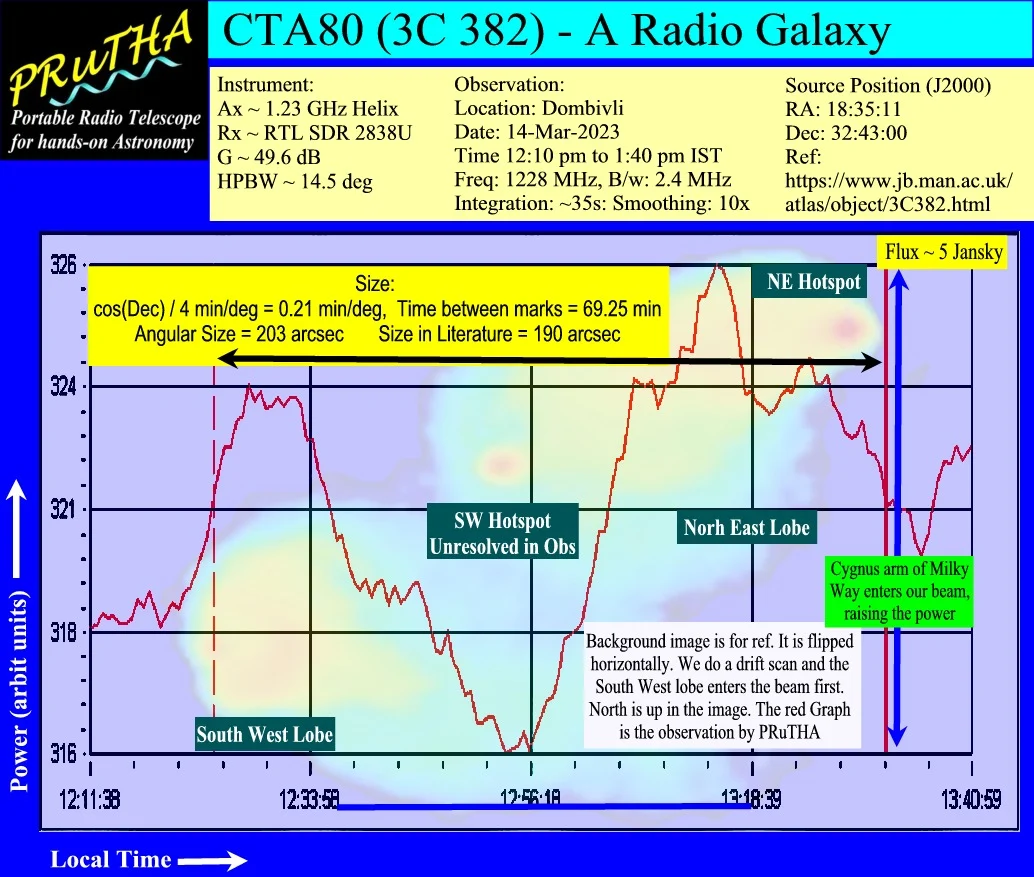
Some exploratory scans have been placed alongside professional radio images to investigate possible associations with more distant sources.

These comparisons are leads for further work. They do not yet establish source detections, sensitivity at 1 Jy, or resolved structure. Apparent similarities need to survive checks of the beam, calibration, receiver behaviour and terrestrial interference.

Bright-pulsar observing is also an ambition for future investigation, rather than a demonstrated capability.

Historical comparative scan and reference-image compositeEnlarge image
Exploratory composite from the project archive. Reference imagery is not an image made by PRuTHA; original embedded labels and credits are retained.

HOW WE WANT TO WORK

Keep the evidence.
Make room for doubt.

A useful observing record includes the setup, original data, processing steps and what could have gone wrong. That makes another test possible.

See how PRuTHABx supports the workflow

Record the antenna and receiver settings.

Keep an unaltered original recording.

Log interference, weather and setup changes.

Repeat and compare control observations.

Report uncertainty alongside an interpretation.